This is the story of the McGregor line in our family—beginning in a Lowland weaving cottage near Musselburgh, Scotland, in the early 1700s, and carried across the Atlantic by a young boy who would one day be known as the “Old Scot Preacher.” From there, the line took root in North Carolina, Tennessee, Mississippi, and beyond.
Facts in this narrative come from parish registers, family records, and compiled genealogies. Where the records fall silent, I’ve added historically informed details and clearly marked speculation.
The McGregor Cottage in Inveresk
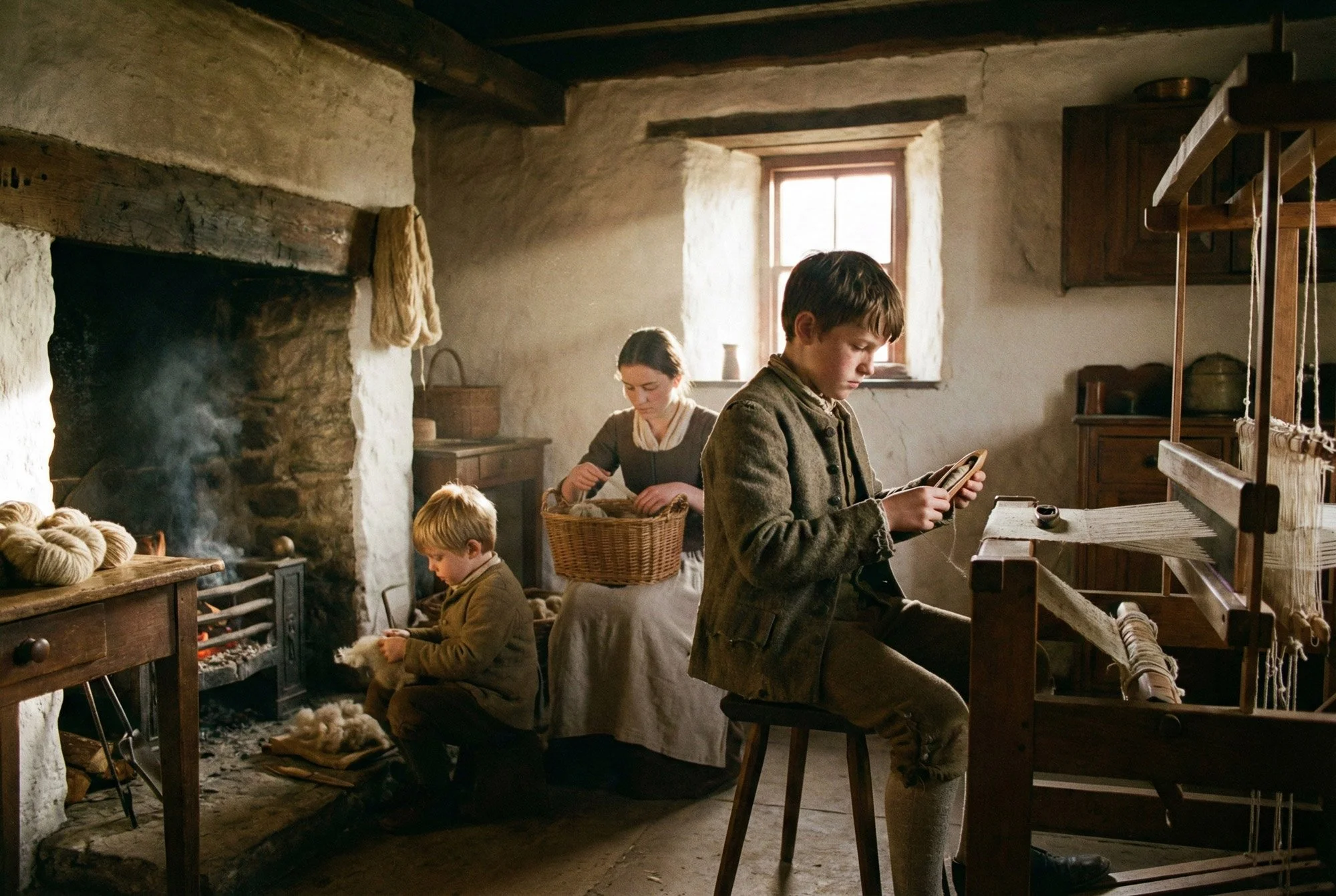
In the 1720s, the McGregors lived in a world of clatter and cloth. Their home was likely a modest stone two-room cottage on the outskirts of Musselburgh—what Scots called a traditional “but and ben” (one outer room for cooking and work, and an inner room for living and sleeping). From the door you could see the fields falling away toward the Firth of Forth, and if the day was clear, the shimmer of water catching the light.
Inside, a large wooden loom filled one corner. William McGregor, the father, was a weaver; his days were measured out in the steady rhythm of warped threads, shuttles flying back and forth, and bundles of finished linen or wool being weighed for sale. Musselburgh was a working town—part harbour, part market, part weaving centre—and the clack of looms and the smell of wet flax would have been as familiar to young William as the tolling of the kirk bell.
Children at Work
For the children, chores started early. School, if they attended, meant basic reading, psalms, and catechism; writing and arithmetic were luxuries. Work was not. Girls helped their mother, Margaret Scott, with combing and carding wool, spinning yarn, washing and bleaching cloth in the burn, and tending the fire. Boys wound bobbins, carried fuel, fetched water, and ran errands through Musselburgh’s wynds and along the harbour.
The surviving son born in January 1733—William Bartlett McGregor, later remembered as the “Old Scot Preacher”—grew up knowing he bore a name that had already been carved in grief. Two earlier brothers named William had died as children. The reuse of names was a way of keeping love and memory alive in a world where disease could take a child in days.
The Direct Line: From Weaver’s Son to Amalene Amoth
The line below traces the McGregor ancestry from the 17th century in Scotland down to Amalene (Holloway) Amoth. Items marked as speculative reflect connections that appear in online trees but still need stronger documentary proof.
- Donald MacGregor (b. c.1630, Scotland) + Margaret Campbell of “Gleneaves” (b. c.1636) — speculative MacGregor–Campbell connection, not yet proven in records.
-
Peter McGregor (b. 1659, Scotland – d. 1710, Selkirkshire, Scotland)
+ Isobel / Isabell McDougall (McDigall) (b. c. 1670s?, probably Midlothian).
Documented as parents of William McGregor in the Inveresk baptism of 1693.
-
William McGregor (the elder, weaver)
b. 26 Jul 1693 – Inveresk with Musselburgh, Midlothian, Scotland
d. 1786 – Montgomery County, North Carolina, USA (death place from compiled tree; not yet proven)
m. Margaret “Molly” Scott (b. 28 Mar 1698 – Inveresk; parents Robert Scott & Margaret Hay). -
Rev. William Bartlett McGregor, II — “Old Scot Preacher”
b. 19 Jan 1733 – Inveresk with Musselburgh, Midlothian, Scotland
d. 1807 – Montgomery County, North Carolina, USA
Scottish-born Baptist preacher on the North Carolina frontier. -
Ezekiel M. McGregor (twin)
b. 26 Nov 1784 – Northampton / Wake Forest area, North Carolina, USA
d. 23 Sep 1856 – McMinnville, Warren County, Tennessee, USA -
Willis Nard McGregor
b. 1812 – Warren County, Tennessee, USA
d. 8 Mar 1860 – Pontotoc County, Mississippi, USA -
Wiley M. “Bud” McGregor
b. 3 Mar 1848 – Pontotoc County, Mississippi, USA
d. 23 Dec 1898 – Pontotoc County, Mississippi, USA -
Mary Elizabeth “Mattie” McGregor
b. 16 Jan 1872 – Pontotoc, Mississippi, USA
d. 19 Nov 1909 – Pontotoc County, Mississippi, USA
m. Perry Monroe Holloway. -
Perry Monroe Holloway
b. 27 Jul 1897 – Mississippi, USA
d. 13 May 1965 – Pontotoc, Mississippi, USA -
Amalene (Holloway) Amoth
b. 13 Jul 1931 – Pontotoc, Mississippi, USA
d. 3 Jan 2006 – Blythewood, Richland County, South Carolina, USA
Tree View
-
Donald MacGregor???
(c.1630)
Speculative
-
Peter McGregor
(1659–1710, Selkirkshire)
-
William McGregor
(b. 1693 Inveresk; d. 1786? Montgomery Co., NC)
WEAVER
-
Rev. William Bartlett McGregor, II
(1733–1807, Montgomery Co., NC)
BAPTIST MINISTER
FARMER
-
Ezekiel M. McGregor (twin)
(1784–1856, TN)
FARMER
-
Willis Nard McGregor
(1812–1860, Pontotoc MS)
FARMER
-
Wiley M. “Bud” McGregor
(1848–1898, Pontotoc MS)
FARMER
-
Mary Elizabeth “Mattie” McGregor
(1872–1909, Pontotoc MS)
-
Perry Monroe Holloway
(1897–1965, Pontotoc MS)
FARMER
- Amalene (Holloway) Amoth (1931–2006)
-
Perry Monroe Holloway
(1897–1965, Pontotoc MS)
FARMER
-
Mary Elizabeth “Mattie” McGregor
(1872–1909, Pontotoc MS)
-
Wiley M. “Bud” McGregor
(1848–1898, Pontotoc MS)
FARMER
-
Willis Nard McGregor
(1812–1860, Pontotoc MS)
FARMER
-
Ezekiel M. McGregor (twin)
(1784–1856, TN)
FARMER
-
Rev. William Bartlett McGregor, II
(1733–1807, Montgomery Co., NC)
BAPTIST MINISTER
FARMER
-
William McGregor
(b. 1693 Inveresk; d. 1786? Montgomery Co., NC)
WEAVER
-
Peter McGregor
(1659–1710, Selkirkshire)
Siblings in Inveresk: A Household of Reused Names
The Old Scot Preacher did not grow up alone. Parish records show William and Margaret Scott bringing a long line of children to the font at Inveresk, including three sons named William and two daughters named Jean. The pattern speaks to both love and loss.
- Helen McGregor – b. 1719
- Jean McGregor – b. 1721 (died young)
- Margaret McGregor – b. 1724
- William McGregor – b. 1726 (died young)
- Janet McGregor – b. 1728
- James McGregor – b. 1730
- Jean McGregor – b. 1732
- William Bartlett McGregor, II – b. Jan 1733
- Katharine McGregor – b. 1734
- John McGregor – b. 1736
Story: From a Weaver’s Son to a Frontier Preacher
The next section blends documented facts with historically informed reconstruction. Where specific details are unknown, they are grounded in what we know about 18th-century Scotland and the American colonies.
The Shadow of the ’45
When William was around twelve, news of the 1745 Jacobite Rising swept through the region. Edinburgh lay only a morning’s walk away. Highland regiments loyal to Charles Edward Stuart (Bonnie Prince Charlie) marched through the Lowlands, and the city itself briefly fell under Jacobite control. Musselburgh would have seen troop movements, supply wagons, and anxious coastal defenses. For a McGregor household—bearing a name once associated with Highland rebellion—it was a tense time. Whatever their politics, the drums of war were unmistakable.
Crossing the Atlantic
At some point in the mid-18th century, the young William left Scotland. No passenger list has been found that names him, and that is not surprising. Most Scots emigrating in this era traveled on small brigs and cargo vessels carrying timber, tobacco, linen, or wheat. Passengers were rarely recorded cleanly; many ship papers have been lost to time, water, or fire.
We can imagine him climbing a gangplank at Leith or another Firth of Forth harbour, his belongings packed into a chest or sack: a spare shirt, perhaps a Bible, maybe a small keepsake from home. The voyage would have taken six to eight weeks if the winds were kind. Steerage passengers slept in cramped, airless quarters below decks, with rough food, stale water, and constant damp. Somewhere on that wide Atlantic, the boy from a Musselburgh weaving family began to turn into the man who would preach on a far frontier.
New Life in North Carolina
By the time records pick him up again, William Bartlett McGregor is no longer a weaver’s son on the Firth of Forth but a Baptist preacher in what is now Montgomery County, North Carolina. He settled among other Scots and Scots-Irish along the Pee Dee and Yadkin rivers, in a rough landscape of hardwood ridges and bottomland farms.
Many of his neighbours were Presbyterian by upbringing, yet he embraced the then-unusual path of Baptist faith, helping to establish small congregations in log meetinghouses on the edge of the American frontier. His tomb still stands today on a wooded ridge in what is now Morrow Mountain State Park—a Scottish kirk-goer turned American frontier preacher.
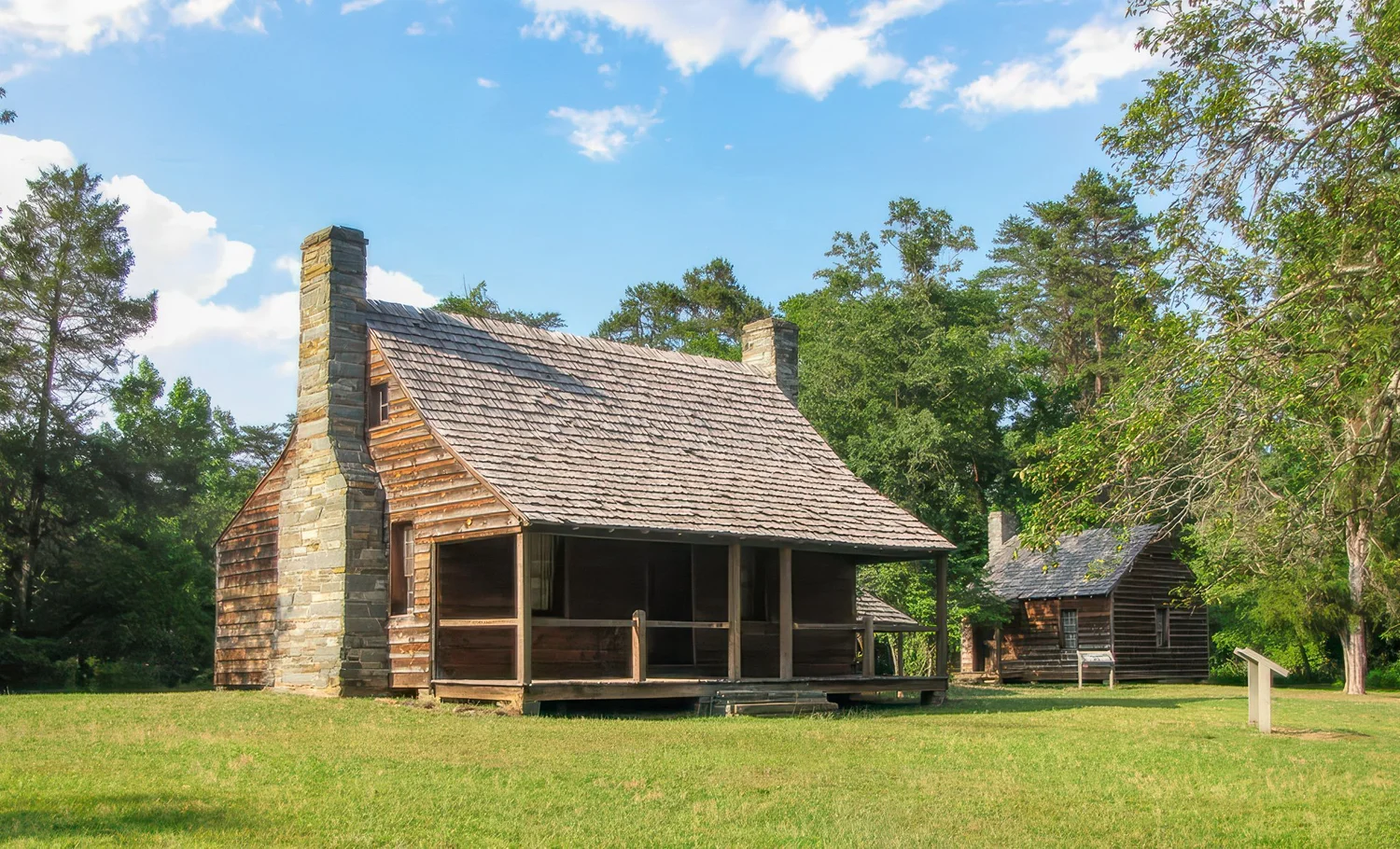
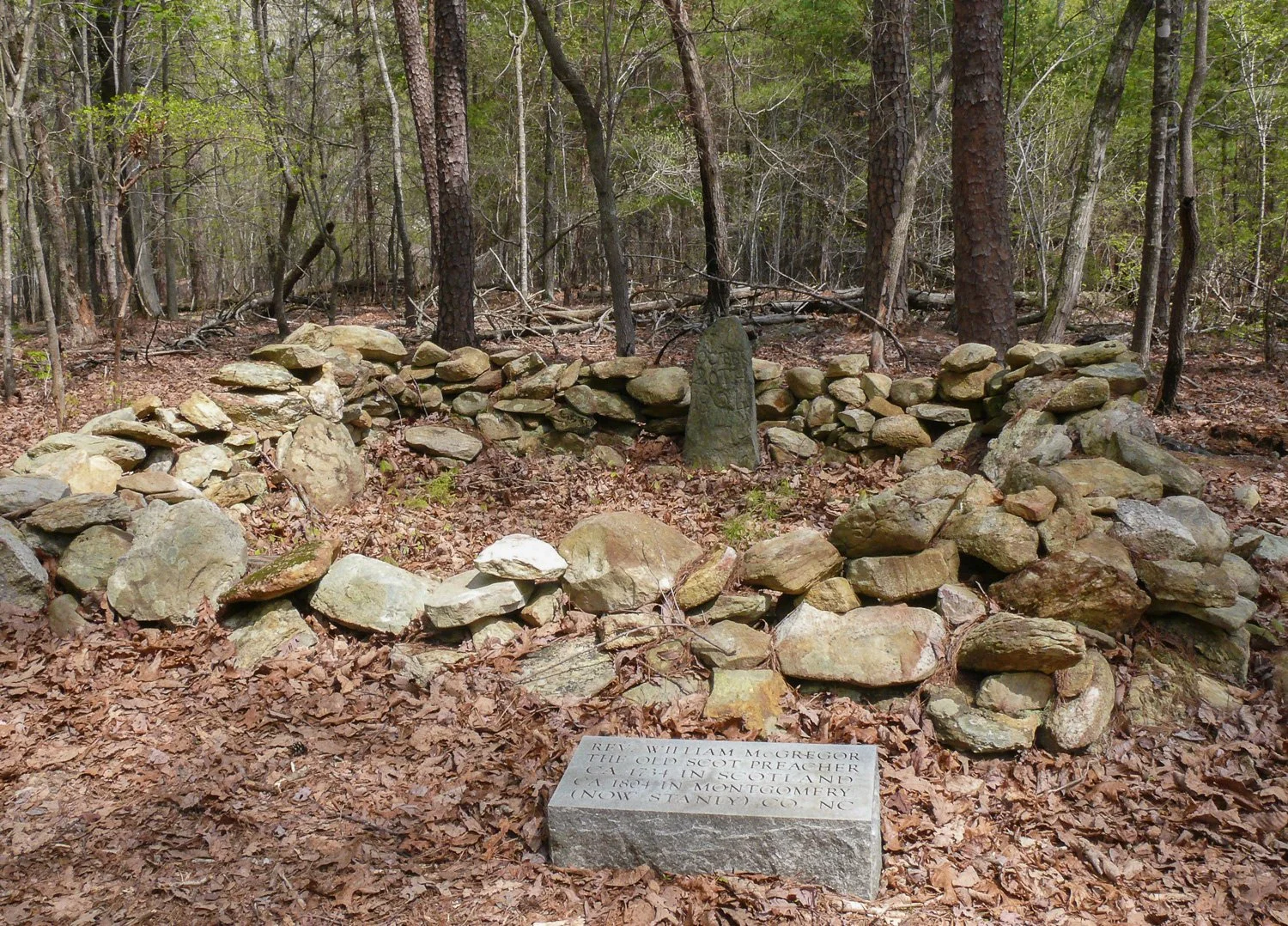
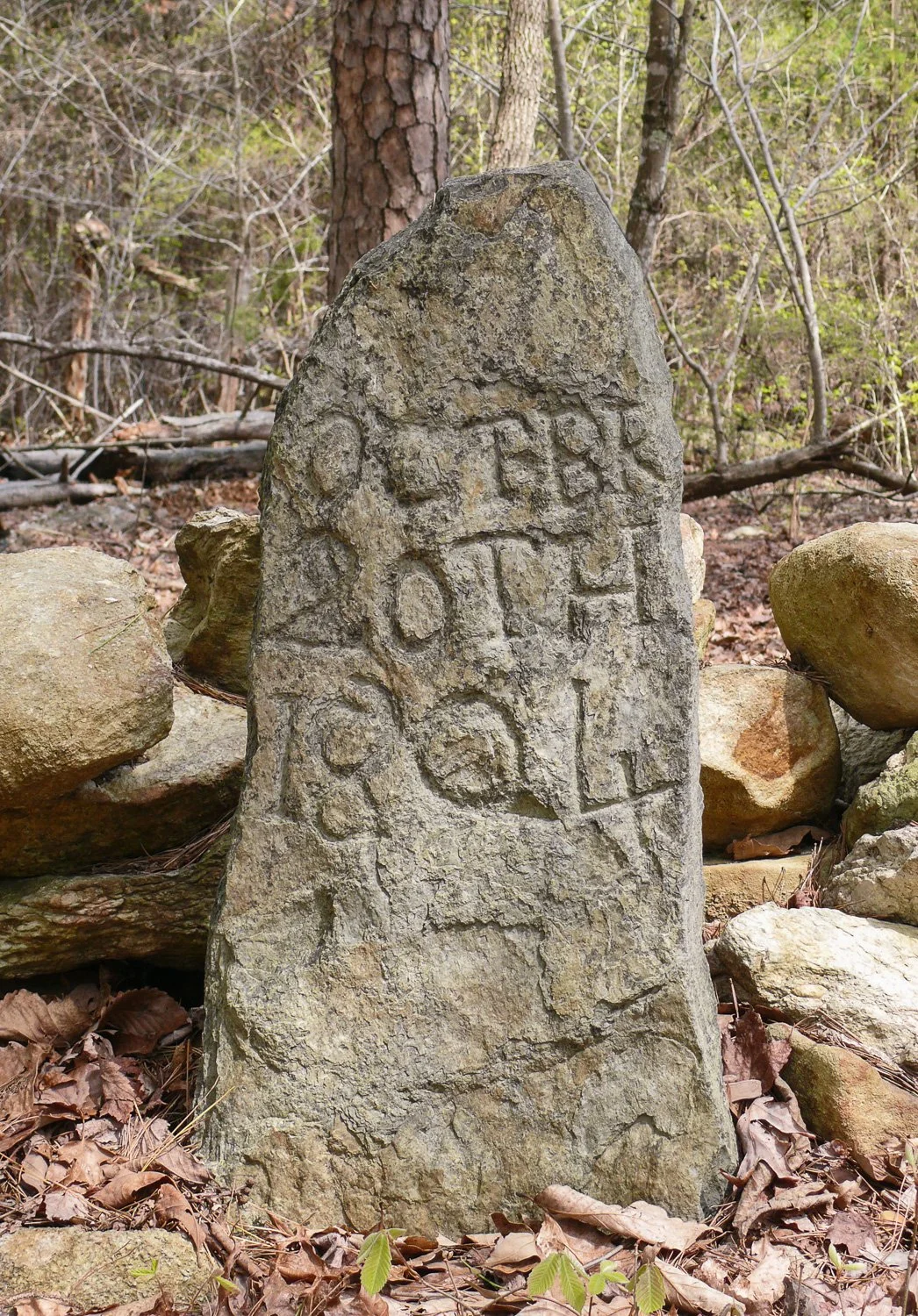
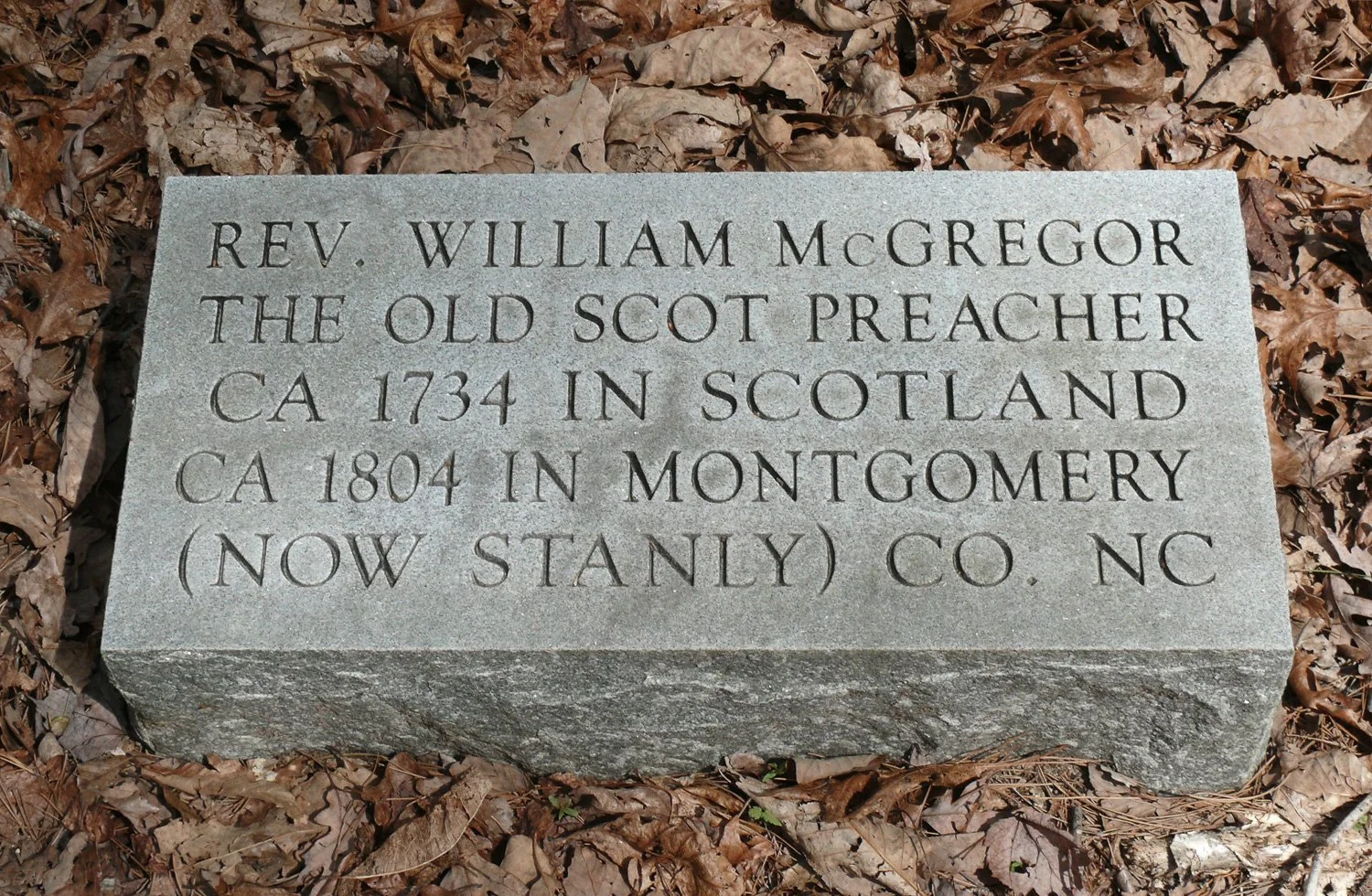
From there the family kept moving. William’s descendant Ezekiel M. McGregor was born in North Carolina in 1784 but died in McMinnville, Tennessee in 1856, carrying the line west over the mountains. Ezekiel’s son Willis Nard McGregor, born in 1812, pushed further south and west to Pontotoc County, Mississippi, where he died in 1860. His son Wiley “Bud” McGregor and granddaughter Mary Elizabeth “Mattie” McGregor lived and died in Pontotoc, weaving the old Scottish name into Mississippi soil.
In 1897 Mattie’s son Perry Monroe Holloway was born in Mississippi. He would grow up, marry, and raise a daughter named Amalene—born 13 July 1931 in Pontotoc, Mississippi. Amalene’s life eventually led from small-town Mississippi to South Carolina, and from there the story continues into our own generation.
Migration Snapshot
Over three centuries the line runs from a weaver’s cottage near Edinburgh, through pulpits and farmsteads on the North Carolina frontier, across Tennessee hills to Mississippi red clay, and finally into the lives of the Holloway and Amoth families.